
What Can Go In A Dumpster, And What Cannot
Most Of It Goes In.
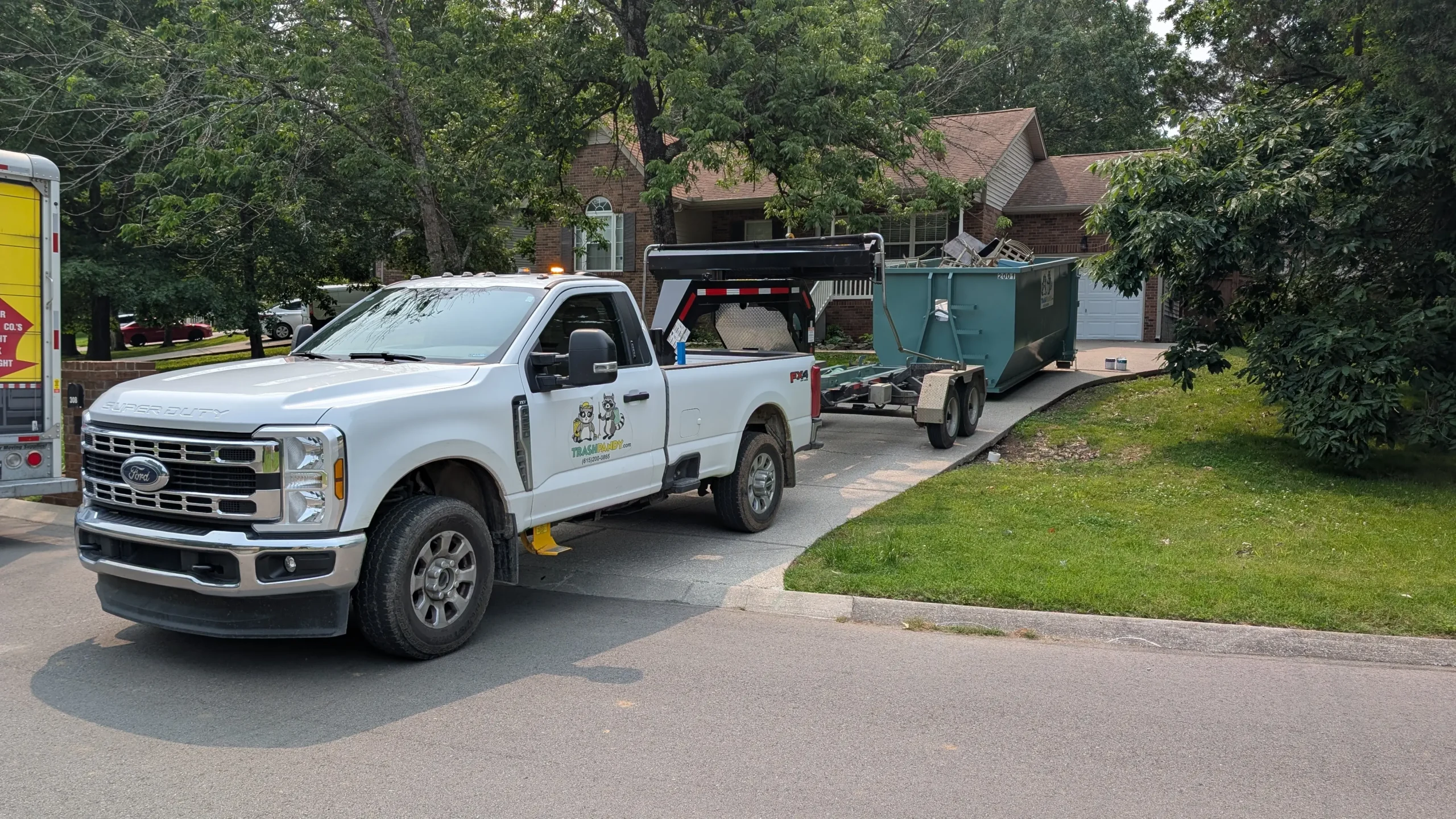
Most of it goes in. Household junk, remodeling debris, roofing materials, yard waste, furniture and general construction waste all load straight into the container with no special handling.
Three things change that: a short list of materials we cannot accept at all, a short list that costs a little extra, and one rule about how high you fill it.
What Goes Straight In
Need loading help? Request full service junk removal for $120 per hour for a two-person team. Mattress and box spring recycling is $50 per item.
These load into any container with no special handling and no extra charge.
Accepted
- Household junkBagged trash, clutter, furniture, mattresses
- Remodeling debrisWood, drywall, cardboard, cabinets, trim
- Roofing materialsShingles, felt paper, flashing
- Yard wasteBranches, brush, leaves, landscaping debris
- Concrete and masonryConcrete, brick, block, stone. Heavy duty 10-yard fill container only
- Garage and attic cleanoutsClothes, toys, old equipment, general junk
What Cannot Go In At Any Price
Hazardous materials, fuel, flammables, medical waste, dead animals and non household batteries cannot go in a dumpster at any price. The disposal facility refuses them under state regulation, so there is no version of the answer where they are acceptable.
Prohibited
- Hazardous materialsChemicals, asbestos, pesticides, solvents
- Fuel and flammablesGasoline, propane tanks, stains, flammable liquids
- Medical wasteSharps, pharmaceuticals, biohazard materials
- Dead animalsCarcasses, animal or human waste
- Non household batteriesCar batteries, industrial batteries
What Carries A Small Fee
Four items cost extra. They go in, they are just charged separately because the disposal facility charges us to take them.
| Item | Fee | Basis |
|---|---|---|
| Tires | $15 | each |
| Wet paint | $10 | per gallon |
| Large electronics | $30 | each |
| Televisions | $30 | each |
These are not penalties. The facility charges extra to accept them and we pass that through at cost, rather than turning the item away or surprising you on the invoice.
Why The List Looks Arbitrary
The rules are not ours. The disposal facility sets them, and we take every load to the same place.
The facility will not accept whole tires or car batteries at any price. Hazardous and liquid waste is refused outright under state regulation. That is why a tire carries a fee instead of simply going in, and why there is no version of the answer where paint thinner is fine.
A national dumpster site cannot tell you this, because the rules change from facility to facility. Ours do not change.
The One Rule That Catches Everyone
Nothing may stick up above the top rail. That is the only hard limit on the container.
An overfilled load is not road legal, so the driver has to refuse it and you unload the excess before it can go anywhere. On the 10, 15, 20 and 30 there is no tonnage included and none wasted, so weight is billed at $140 a ton on what the load actually weighs. There is no penalty for a heavy load. There is a hard stop on an overfilled one.
Where Each Material Goes
Or start from dumpster rental in Middle Tennessee.
Questions We Get Every Week
What can you put in a dumpster?
Household junk, remodeling debris, roofing materials, yard waste, furniture and general construction waste all go straight in with no special handling.
Concrete, brick, dirt and other heavy fill are the exception. Those need the 10-yard fill container rather than a metered size.
What can you not put in a dumpster?
Hazardous materials, fuel and flammables, medical waste, dead animals and non household batteries cannot go in any container at any price.
The disposal facility refuses them under state regulation, so there is no version of the answer where they are acceptable. If you are unsure about an item, call (615) 200-0865 before it goes in rather than after.
Can you put a mattress in a dumpster?
Mattresses and box springs are accepted for a $50 recycling fee per item. A mattress and box spring together cost $100 in item fees.
The same applies to furniture, clothing and general clutter from a garage or attic clearout.
Can you put tires in a dumpster?
Yes, for $15 each. They cannot simply go in free because the disposal facility will not accept whole tires at any price.
The fee is what it costs us to have them taken separately, passed through rather than marked up or discovered on your invoice afterwards.
Can you throw away paint?
Wet paint costs $10 a gallon. Fully dried paint in an open can goes in with general waste at no charge.
Solvents, thinners and stains are a different category and cannot go in at all. Those are flammable liquids and the facility refuses them outright.
Call Before You Throw It In
One question now is cheaper than a refused load later. Call (615) 200-0865 and describe the item.
Can You Put Appliances in a Dumpster?
Appliance type determines disposal requirements. Tell Trash Pandy exactly what you want to discard before adding it to your rental load. Refrigerators, freezers and other equipment may need different handling from ordinary household clutter. Do not assume all appliances are accepted or that special disposal is included in the rental. Keep questionable items separate until you receive clear instructions. Share appliance types and quantities when planning container space. Confirm acceptance, any additional charges and loading arrangements before scheduling your cleanout or placing appliances inside the dumpster.
Can You Put a Couch in a Dumpster?
Couch dimensions affect dumpster space requirements. Tell Trash Pandy whether you have a sofa, sectional or sleeper couch, plus any other furniture. Bulky pieces can use container space differently from boxes or loose household clutter. Set aside usable furniture for donation when practical. Confirm any special charges and loading requirements instead of assuming all furniture is handled alike. Plan a safe route from the home to the dumpster. Share your item list, compare container options and arrange your rental before moving unwanted furniture outside.